I write about index funds, ISAs, buying less crap and the slow compounding of money. So it might seem odd that I'm recommending a novel. Stick with me, because this one sits closer to the middle of what this website is actually about than anything else I've written about this year.
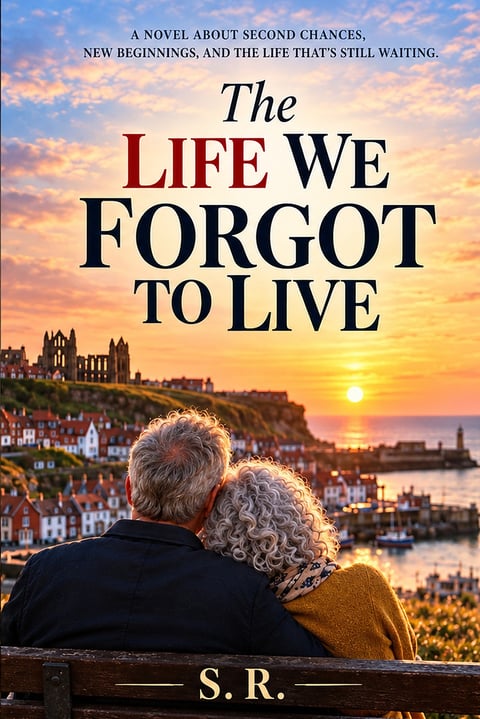
The Life We Forgot to Live is a book about a man who spent forty years trying to get somewhere, retired, and discovered he couldn't remember where he'd meant to go.
That's the whole thing, really. That's the hook, and it got me in the first twenty pages.
What The Life We Forgot to Live Is About
David is four months into retirement. The structure that held his life together — the alarm, the commute, the job title, the reason to be somewhere at nine o'clock — has gone, and what's left is a man in a house with a wife he loves and no idea what he's supposed to be doing with the days that remain.
Then he clears out the spare room, finds an old photograph from 1985, and on the back, in his own handwriting, is a list. Drive across Europe. Write a book. See the Northern Lights. Take Helen to Paris. Everything he and Helen promised each other they would do one day, written down by a younger, more certain version of himself who assumed there would always be more time.
And the book is what happens when he decides to start saying yes.
It's set between Leeds in 1984, where the young David and Helen meet, and the present day, with a trip to the Isle of Mull running through it. A list from a marriage's beginning, being worked through at the end of it. Everything the two of them put off, finally being picked up thirty-four years later by two people who are not the people who wrote it.
Helen picks up her camera again. That's the bit that got me. Not the big trip, not the Northern Lights — the fact that somewhere along the way she stopped taking photographs, and nobody noticed it happening, and it takes a list written by a young man in 1985 to remind her who she used to be.
Why A Personal Finance Website Is Recommending A Novel
Here's my reasoning, and it's not a stretch.
Everything I write about on this website is in service of one thing: having enough freedom later that you get to decide how the last third of your life is spent. That's the entire point of investing regularly, keeping costs low, not buying rubbish you don't need, and leaving it alone to compound for decades. Not to die with a big number. To be able to do something with your remaining time.
Which means the question underneath all of it is: what are you actually going to do with it?
A lot of people spend thirty years building the freedom and then arrive at it with no plan whatsoever. That's not a money problem. The money worked. It's a different problem, and it's the one this book is about.
David did everything right by conventional standards. Job, marriage, mortgage, children, retirement. And then stood in a spare room wondering what the point of the whole exercise was. I'm 66. That is not an abstract question to me.
So this isn't a departure from what this site is about. It's the other half of it.
What The Book Does Well
The relationship is the best thing in it. David and Helen have been married thirty-four years, and the book gets the texture of a long marriage right in a way that fiction rarely does. The teasing that's half affection and half genuinely trying to make the other one laugh. The shorthand. The arguments that aren't about what they appear to be about. The washing machine that won't stop flashing E17, which is exactly the kind of unholy detail that real life is made of, and which most novels would leave out.
It's also genuinely funny, which I wasn't expecting. It's warm rather than sentimental, which is a much more difficult trick than it sounds. Plenty of books about older people are written to make you feel a certain way about older people. This one just lets them be people, with all the daftness and irritation and sudden tenderness that involves.
And the structure works. Cutting between 1984 and now means you meet the young versions of the two people you already know end up together, which gives the present-day sections the weight they need. When David does something in retirement, you know what it cost the young man to get here.
Who Should Read It
If you're anywhere near retirement, or watching your parents go through it, this will land differently than it would have twenty years ago. It's not always comfortable reading for that reason.
If you're mid-career and busy and convinced there'll be time later — that's the other audience, and arguably the one who needs it more.
And if you like the quiet, emotionally honest kind of novel — the sort of thing that reads like A Man Called Ove or The Unlikely Pilgrimage of Harold Fry — this is squarely in that territory. Stories about people who decide, late, to actually start living. If that's a genre you love, you'll love this.
It's also a good book club book, which I realise sounds like a throwaway line and isn't. It's short enough that nobody turns up having only read half of it, and it gives you something to actually disagree about. Whether David is brave or selfish. Whether Helen is patient or complicit. Whether the list was a promise or just something people write when they're twenty-two and don't know any better.
Is It A Romance?
People keep asking this, so let me answer it properly. It's a love story, but not a conventional romance in the genre sense. Nobody's going to write a sequel about the wedding. It's about a marriage thirty-four years in — the unglamorous, daily, ordinary work of staying in love across jobs, children, a mortgage, and the slow accumulation of everything that gets put off.
If you're expecting a meet-cute and a misunderstanding resolved on page 300, that's not this. If you want something that respects what a long marriage actually costs and actually gives back, it is.
Do You Need To Read Book Two?
The Life We Forgot to Live tells a complete story. It stands entirely on its own — you're not left on a cliffhanger, and nothing about the ending feels like a trailer for something else.
That said, it is book one, and the story does continue in The Road We Didn't Take. The characters' lives carry on. So if you finish it and want more — and most people do, because you get attached to David and Helen — there's somewhere to go. But there's no obligation, and no sense that you've been sold half a book.
What It's Not
It's not a self-help book with a story bolted on. It won't give you a five-step framework for having a better retirement. There are no bullet points and nobody summarises the lesson at you at the end.
It's not a bucket-list manual either, despite the list on the back of the photograph. The list is a device, not a checklist, and the book is far more interested in the people holding it than in ticking anything off.
And it isn't relentlessly uplifting in the way that phrase usually means. It's warm and hopeful and it made me laugh, and it also has real sadness in it, because people in their sixties have lost things by then. I'd call it deeply moving rather than simply feel-good, and I think that distinction is why it stayed with me rather than evaporating the way a lot of pleasant fiction does.
The Bit That Stayed With Me
I finished this book thinking about the things I said I'd do. Not the big ones — I've been fortunate, and I've done a good deal of what I wanted to do. The small ones. The ones that were always going to happen next year and then quietly didn't.
That's what the list is really about, and it's why a book about a retired man in Leeds got under the skin of a 66-year-old writing about ETFs. The list isn't about Europe or Paris or the Northern Lights. It's about the version of yourself you were going to become once you had the time, and the growing suspicion that you might have to actually go and become him, rather than waiting for it to happen on its own.
Money can buy you the time. It can't tell you what to do with it. That gap is the whole subject of this novel.
Where To Buy The Life We Forgot to Live
It's available on Amazon in the UK, and there are direct links at the top and bottom of this post, plus on the book's page here on the site.
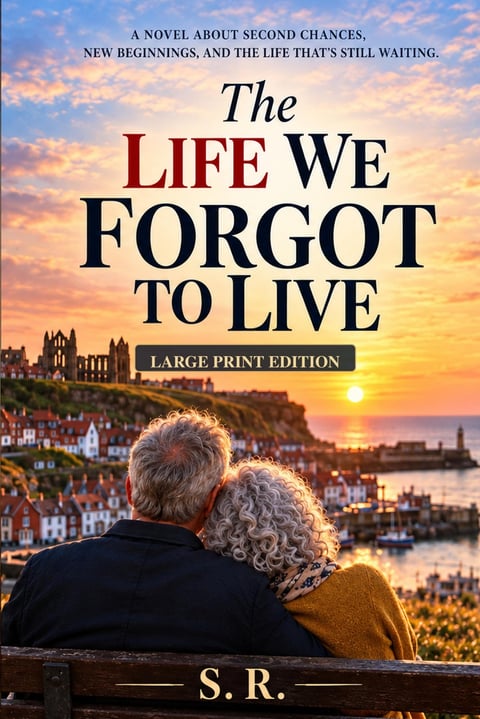
There's also a Large Print Edition, specially formatted with larger, easy-to-read text for a more comfortable reading experience. Same story, same words, just set in bigger type on the page. That's worth knowing about, because a fair number of the people who'd get the most out of this book are exactly the people who'd rather not squint at small print — and it's the sort of option that's easy to miss when you're scrolling a listing page. If your eyes aren't what they were, or you're buying it for a parent, this is the version to go for.
If you read it, I'd genuinely like to know what you made of it. Whether you sided with David or with Helen, and whether you've got a list of your own somewhere that you haven't looked at in a while.
Invest. Wait. Repeat. And then, having done that, work out what it was actually for.
As always, this is a book I chose to write about because I liked it, and the Amazon links are ordinary links rather than paid placements. Nothing here is financial advice. It's a novel, and this is my own opinion of it.