Save Money Tips That Actually Work
Saving money doesn't have to mean giving up everything you enjoy. Often it's the small, everyday decisions that make the biggest difference over time. The goal isn't to have less — it's to make better choices and create more options for yourself in the future.
Important — Please Read
This page is for general information and educational purposes only. It is not financial advice, regulated or otherwise, and should not be treated as a recommendation to take any specific action. We are not authorised by the Financial Conduct Authority. Everyone's financial circumstances are different — always consider your own situation and seek professional advice if you're unsure. Any references to saving, investing, or building wealth are general observations, not promises or guarantees.
50 Easy Ways To Save Money
Small Changes. Bigger Results.
None of these require giving up everything you enjoy. They're small, sustainable decisions that compound over time.
Around The Home
Shopping Smarter
Food & Drink
Cars & Travel
Habits That Matter

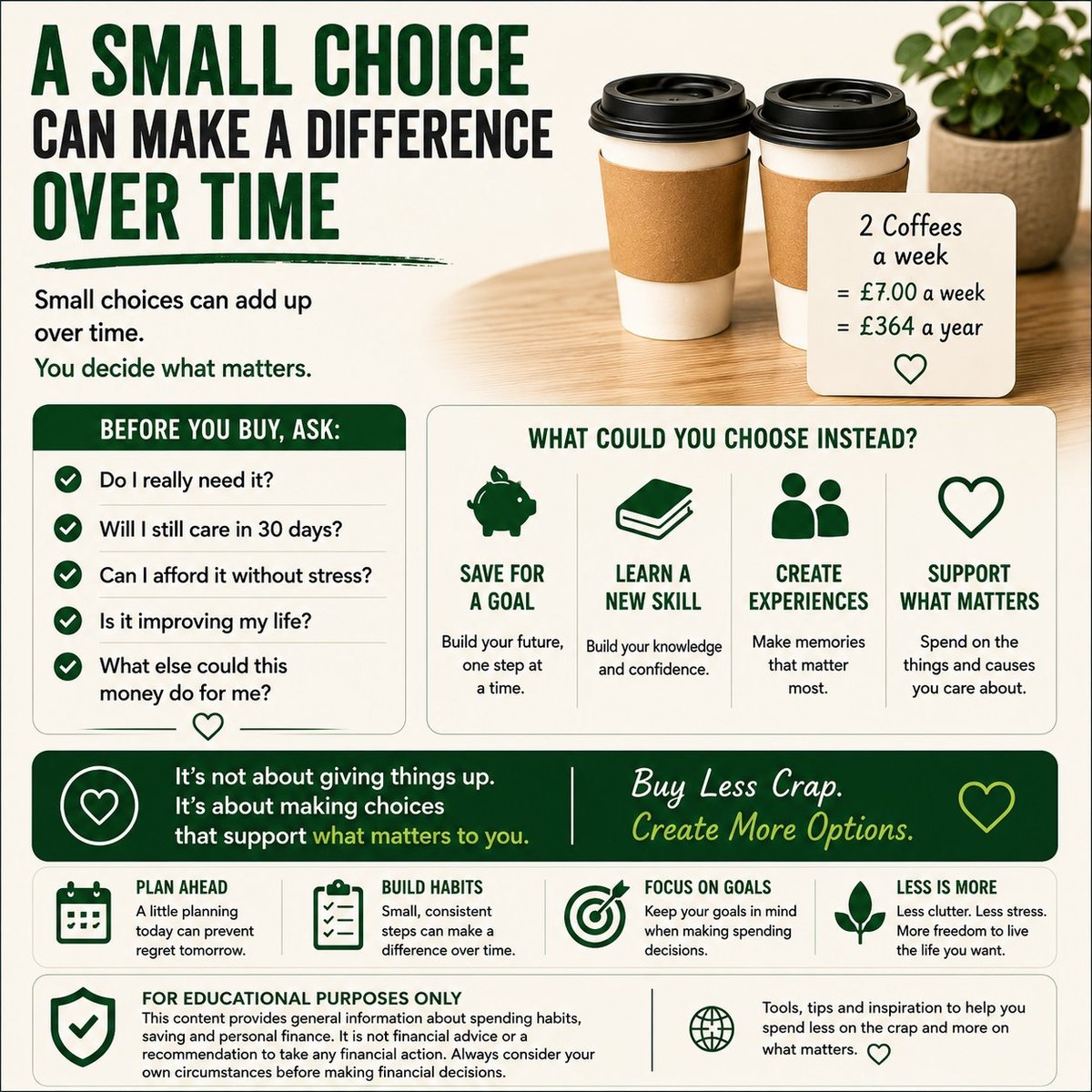
The Buy Less Crap Rule
Before buying anything non-essential, ask:
Do I need it?
Will I use it?
Will I still care about it in 30 days?
What else could this money do?
Sometimes the answer will be "buy it."
Sometimes it won't.
The important thing is making a conscious choice.

Small choices today can make a difference over time.
The money you save creates options. Some people choose to keep it as an emergency fund. Some explore investing it for the long term. There's no one right answer — it depends on your goals, your circumstances, and what you're comfortable with.
Important Information — Please Read
This page is for general information and educational purposes only. It is not financial advice.
Nothing on this page — or anywhere on Buy Less Crap — constitutes financial advice, investment advice, or a personal recommendation. We are not authorised or regulated by the Financial Conduct Authority (FCA). The content reflects general observations about spending habits, saving, and personal finance and should not be relied upon when making financial decisions.
Any references to saving, investing, building wealth, or financial outcomes are for illustrative and educational discussion only. They are not promises, guarantees, or predictions of future results. The value of investments can go down as well as up, and you may get back less than you put in. Past performance is not a reliable indicator of future results.
Everyone's financial situation, needs, and tolerance for risk are different. What may be appropriate for one person may not be suitable for another. You should consider your own circumstances carefully and, if you are unsure about any course of action, seek independent professional advice from a qualified financial adviser authorised by the FCA.
Tax treatment depends on individual circumstances and may change in the future. ISAs, tax wrappers, and allowances referenced are based on current UK rules which can change in future budgets.