Before You Buy Anything: A Simple Pause That Could Save You Money
How many times have you bought something and later wondered: "Why did I buy that?" You're not alone. A simple pause before buying can lead to better decisions.
Welcome to the Buy Less Crap approach.
Why We Buy Things We Don't Need
Modern life makes spending easy. One click. One tap. One swipe. A product arrives at your door tomorrow.
The challenge isn't access. The challenge is making conscious decisions.
Many purchases happen so quickly that we never stop to ask: "Do I actually need this?"
The Before You Buy Checklist
Before buying anything non-essential, ask yourself:
Do I Need It?
Need and want are different things. There is nothing wrong with wanting something. The important thing is recognising the difference.
Will I Use It?
Be honest. How many unused items are already sitting in drawers, cupboards, garages, loft spaces and spare rooms? If you won't use it, why buy it?
Will I Still Care In 30 Days?
Many purchases feel exciting today. Far fewer still feel exciting next month. Try imagining yourself 30 days from now. Will it still matter?
Can I Afford It Comfortably?
Buying something should not create stress. Consider your bills, your commitments, your priorities. Comfort matters.
What Else Could This Money Do?
Could it help build savings, fund a holiday, cover an emergency, improve your home, or support a personal goal? Sometimes the purchase is still worth it. Sometimes it isn't. The point is to consider your options.
Am I Buying Because Of An Emotion?
Many purchases are emotional. Ask yourself: am I buying this because I'm bored, stressed, frustrated, or trying to feel better? If so, consider waiting.
The 24-Hour Rule
One of the simplest ways to reduce impulse spending is to wait 24 hours before buying anything non-essential.
Tomorrow you may still want it.
Or you may forget about it completely. Both outcomes tell you something useful.
Read the full 24-Hour Rule guide →Common Impulse Purchases
Many people spend money on:
Individually they seem small.
Over time they can add up.
For practical ways to cut back, see 50 easy ways to save money.
Mindful Spending
Thinking before buying.
That's it. Not guilt. Not deprivation. Not budgeting every penny. Just awareness.
The more aware you become, the easier good decisions become.
Buying Something Isn't A Failure
Buy Less Crap isn't about never spending money. If something adds value to your life, helps you achieve a goal, creates a meaningful experience, or solves a genuine problem — then buy it and enjoy it.
The goal is intentional spending, not no spending.
The Buy Less Crap Rule
Before buying, pause for thirty seconds and ask:
"Will I still be happy I bought this in 30 days?"
If the answer is no — or "I'm not sure" — save your money, invest it, or spend it on something you'll genuinely value.
Want to put those savings to work? See how I invest simply. And if you want to see how small amounts can add up mathematically, explore how compounding works.
Frequently Asked Questions
Should I Use This For Every Purchase?
What If I Still Want It After Checking?
Is This About Saving Money?
How Long Should I Pause?
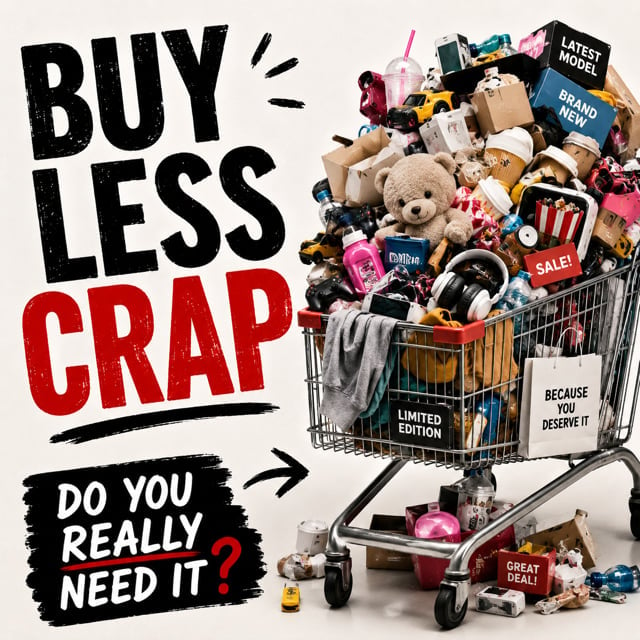
Buy Less Crap. Create More Options.
Small choices today can help create more options tomorrow.
Related Articles
Budget Calculator →
See where all your money goes each month
The Crap Test →
5 questions before every purchase
The 24-Hour Rule →
Stop impulse buying with one simple rule
The Coffee Calculator →
What does your daily habit cost?
Subscription Graveyard →
Cancel what you don't use
Where Is Your Money Really Going? →
Track your spending leaks
Important Information
FOR EDUCATIONAL PURPOSES ONLY
This page provides general information about spending habits, saving and personal finance. It is not financial advice, investment advice, tax advice or a recommendation to take any financial action. Steve is not registered with or authorised by the Financial Conduct Authority (FCA). Always consider your own circumstances before making financial decisions.